IBM Watson
Creating the original avatar for IBM's Jeopardy! Juggernaut
Summary
- IBM needed a televised "face" for Watson, its Jeopardy!-competing cognitive computing system — abstract enough to avoid the uncanny valley, expressive enough for viewers to read what it was "thinking."
- Served as Senior Art Director in a role closer to creative technology: pitched Joshua Davis as the avatar's creator, worked inside his generative code, designed the on-screen answer panel with IBM Research, and ran on-site installation and testing.
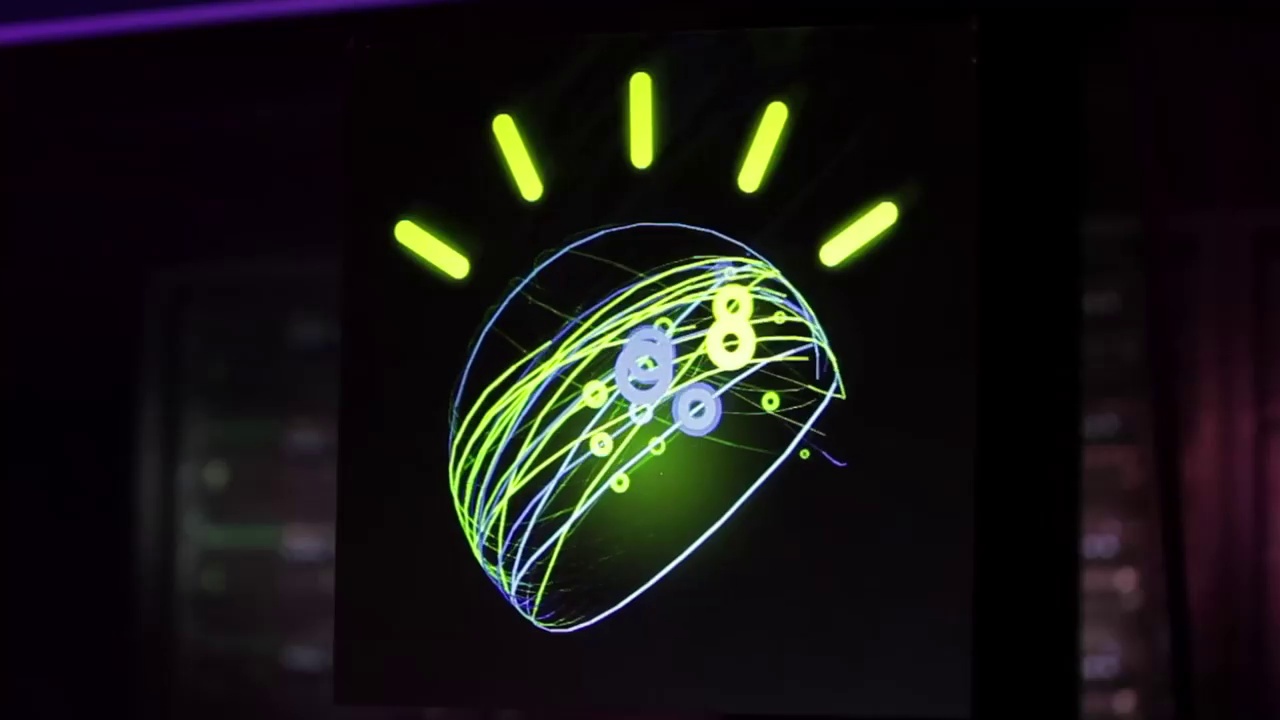
- The avatar's globe of 42 dynamic threads mapped to 36 states tied to Watson's confidence and processing stages, synced live to its DeepQA reasoning engine.
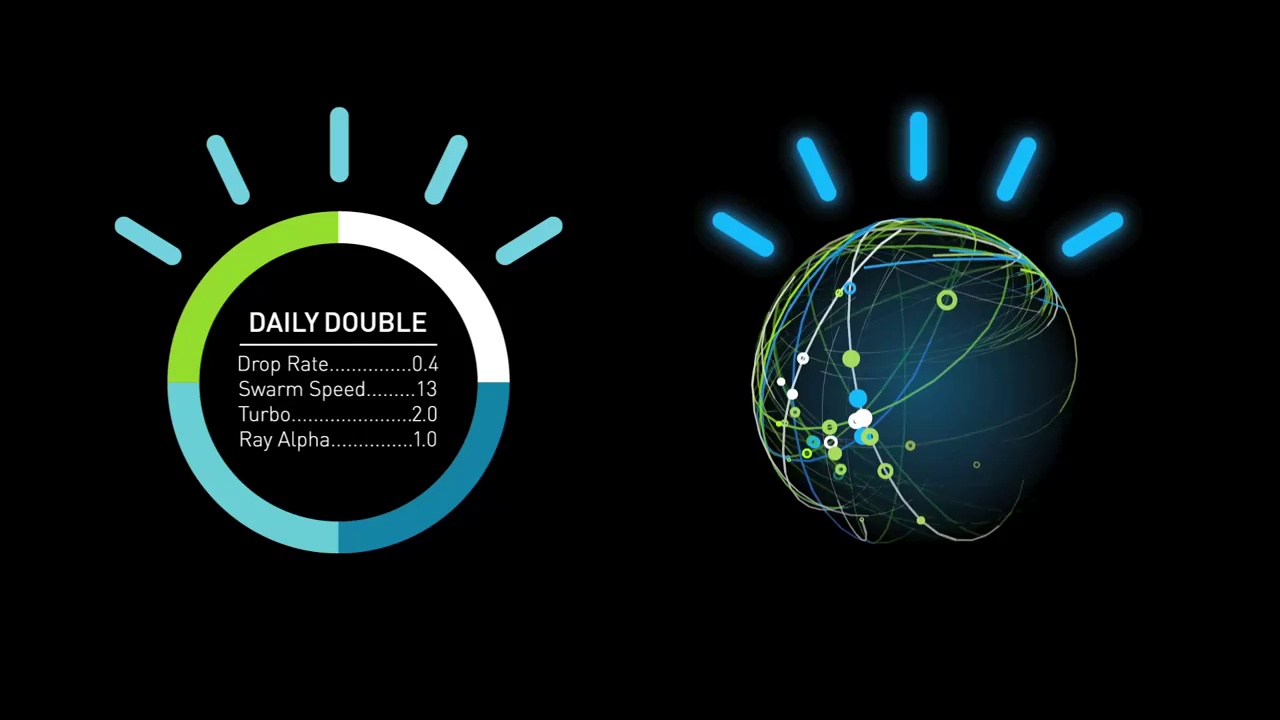
- Designed companion broadcast graphics making the machine's reasoning visible to viewers in real time.
- 40% of viewers said Watson's performance improved their opinion of IBM.
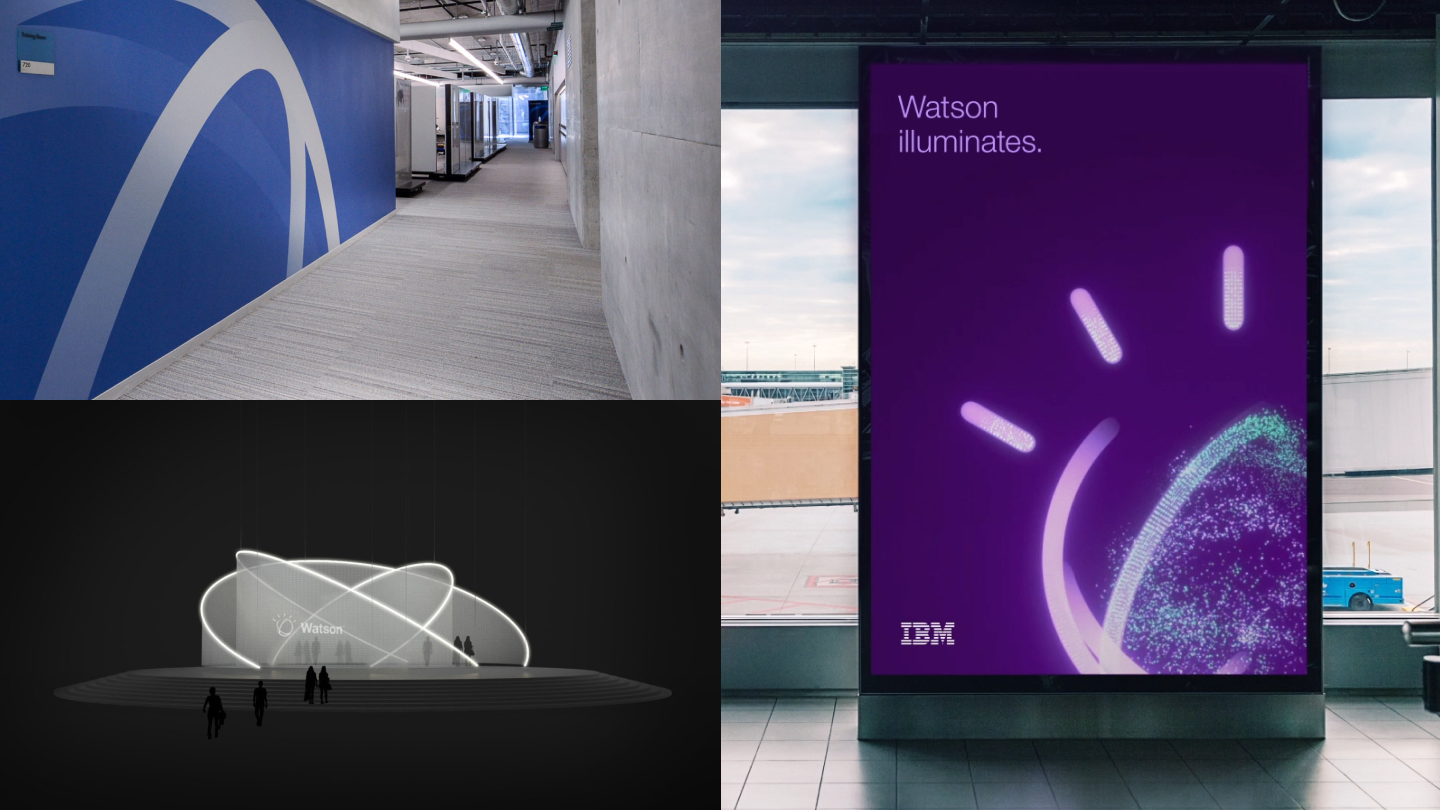
- The globe-and-threads visual language of the original avatar still echoes in how IBM represents Watson today.
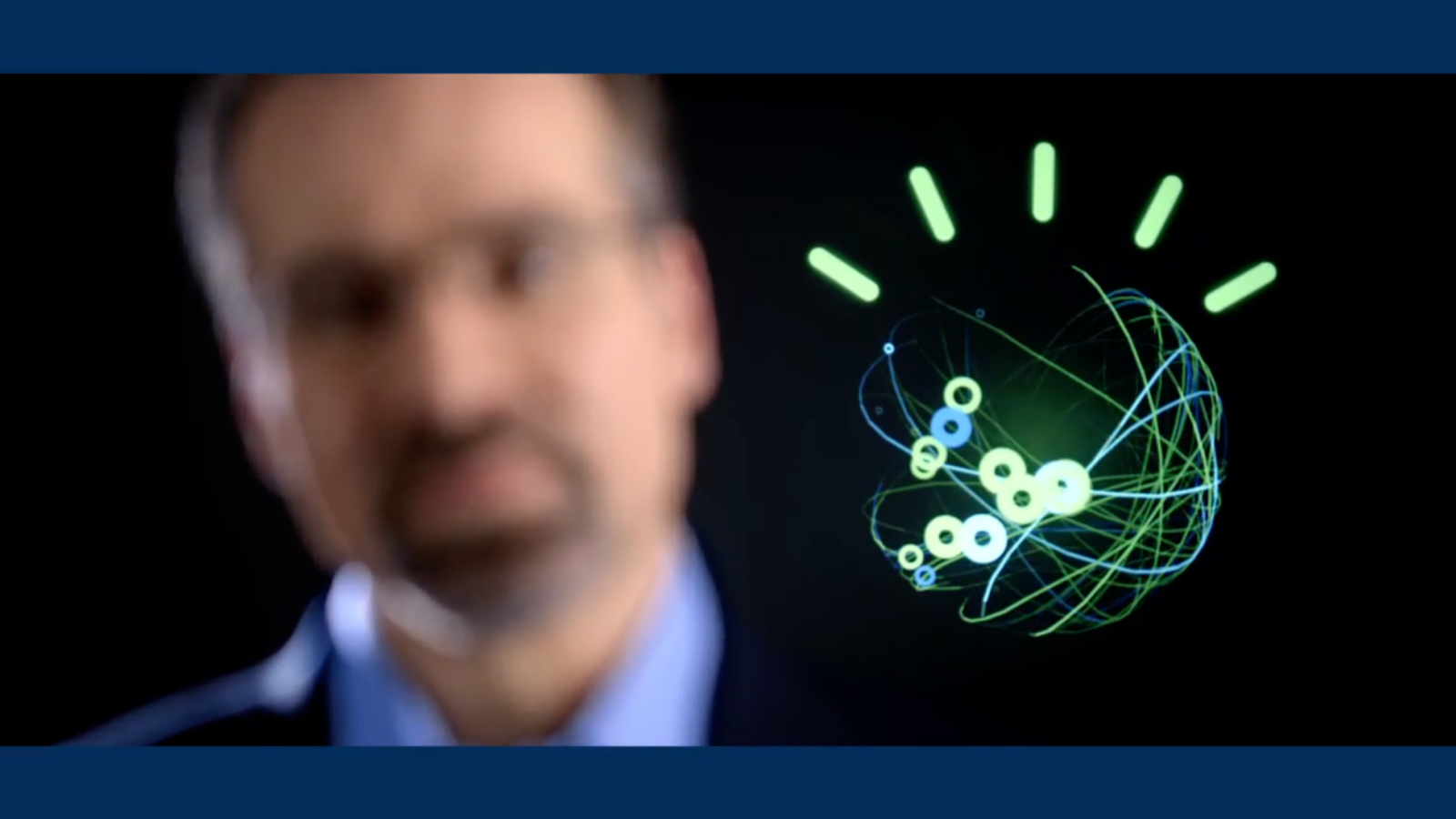
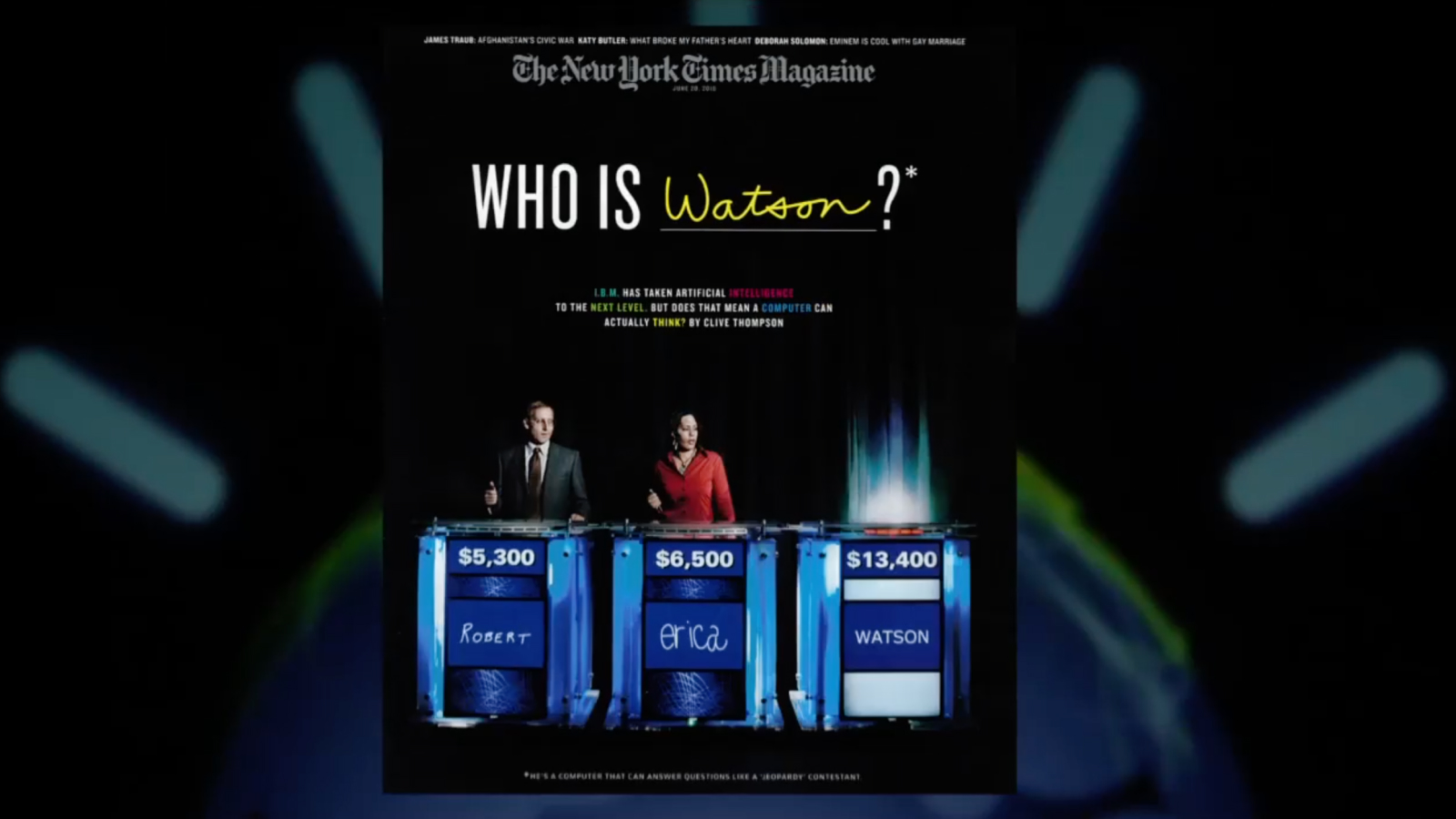
Watson was IBM's experimental cognitive computing system, built to compete on Jeopardy! against the show's two greatest champions. To turn a room of refrigerator-sized server racks into a televised contestant, the project needed a face. This avatar had to be abstract enough to avoid the uncanny valley, but expressive enough that viewers could read what the machine was "thinking" in real time.
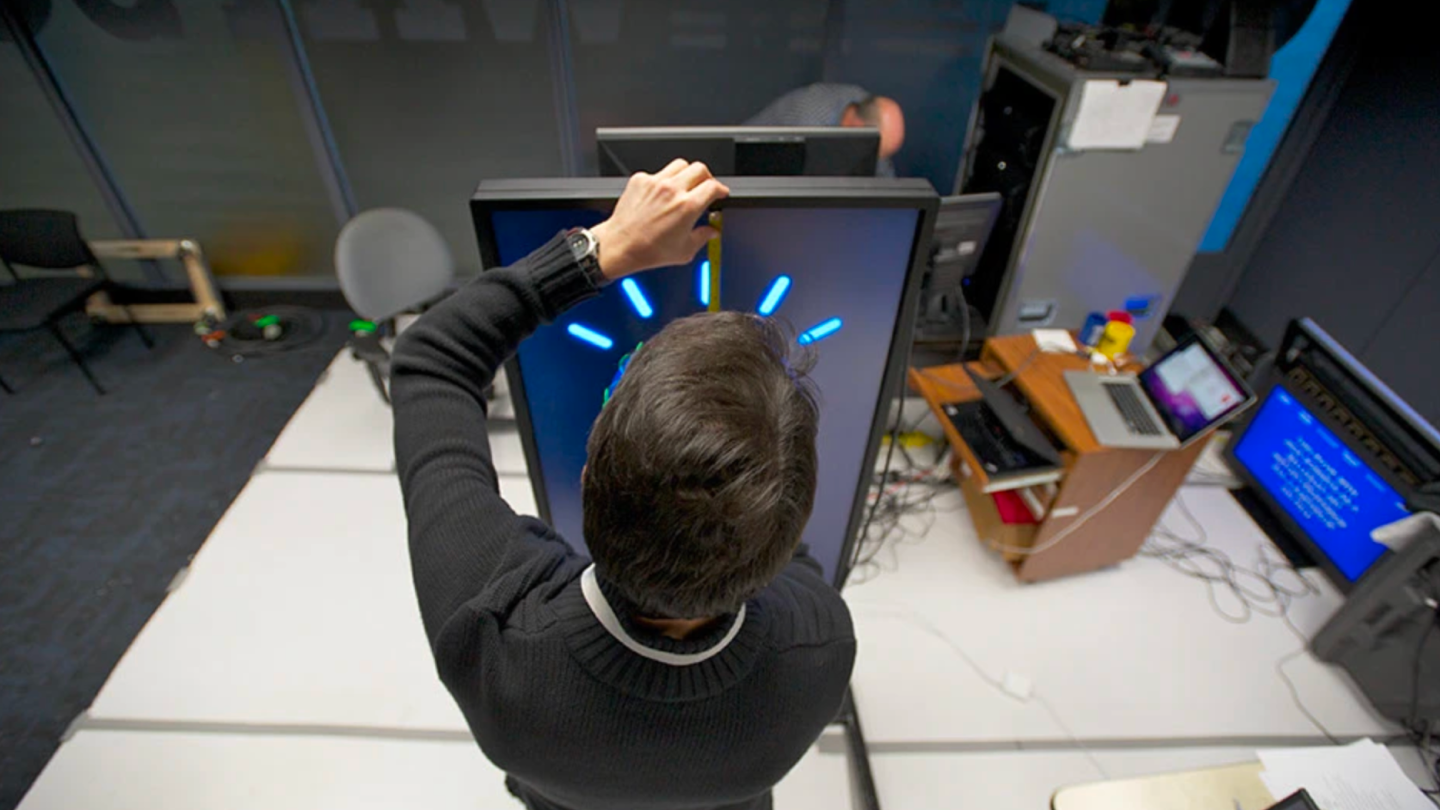
My title was Senior Art Director, but the work was closer to creative technology. I pitched Joshua Davis as the right collaborator for the avatar, worked inside his generative code to refine its behavior, designed the on-screen answer panel with IBM's research team, and ran installation and testing on-site at IBM's TJ Watson Research Center. I also art directed a documentary series on Watson's development.
The Avatar
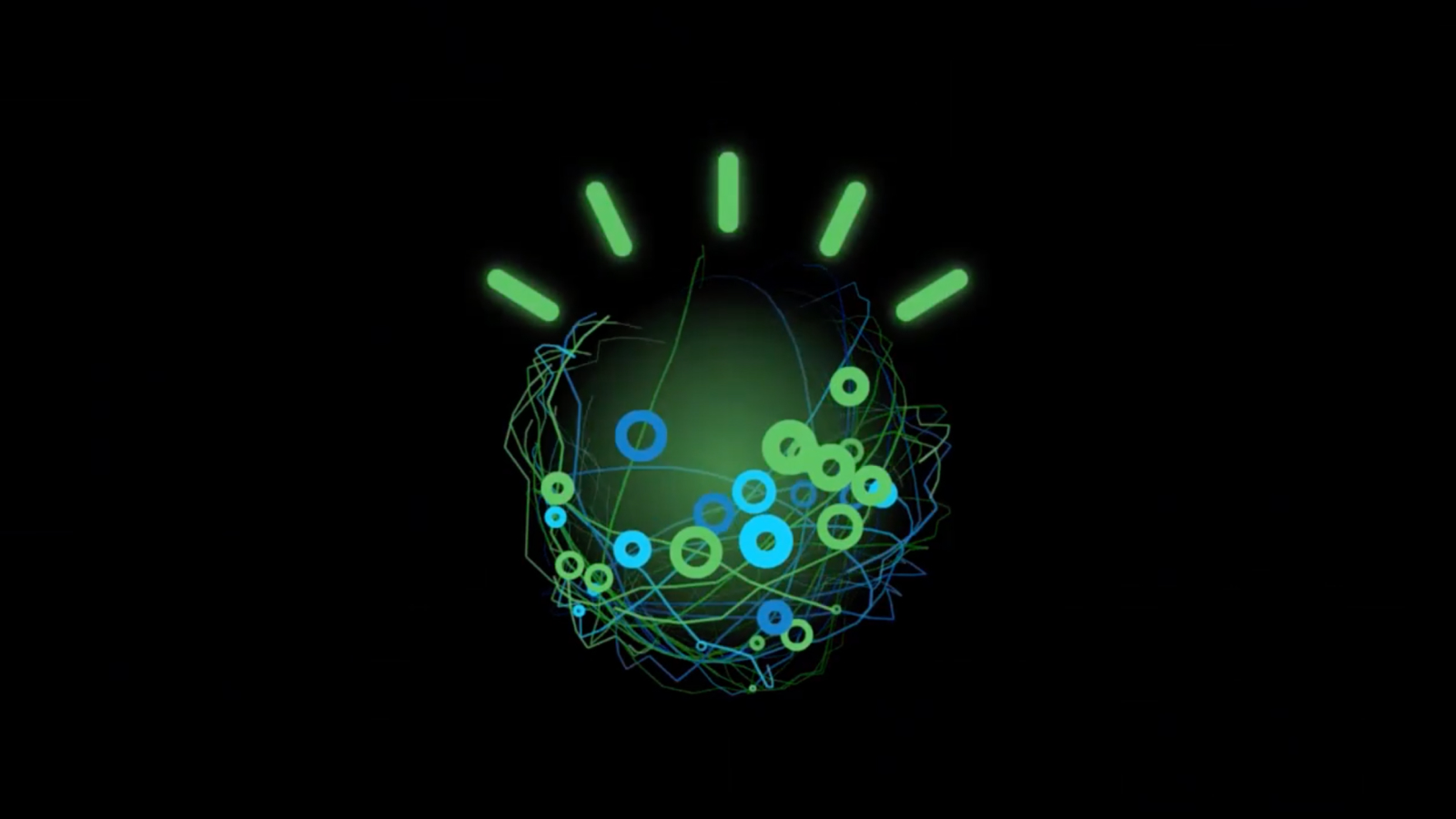
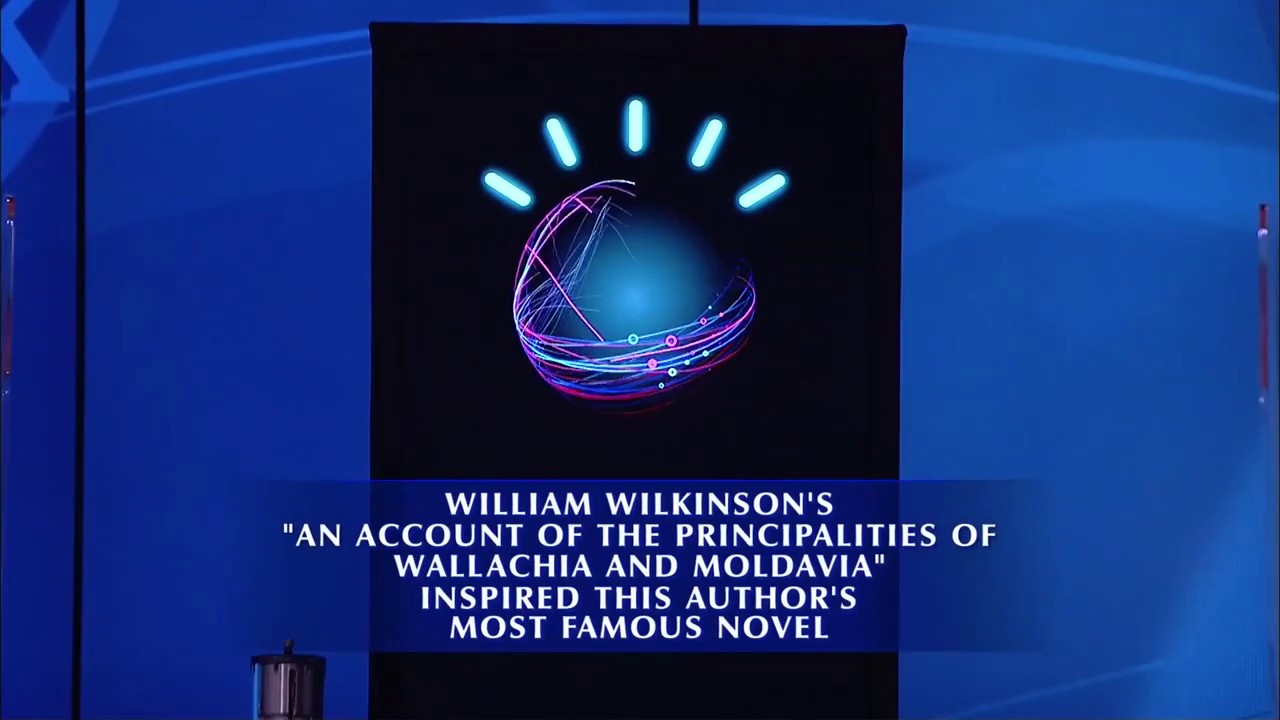
The avatar took the shape of a globe — a nod to IBM's Smarter Planet identity — overlaid with 42 dynamic threads, a Hitchhiker's Guide reference that gave the visualization a wink of personality. A swarm of particles raced across the surface, led by a single bright particle, suggesting thoughts streaming through Watson's processors.
Joshua Davis built the generative system and I worked inside his code to map 36 distinct visual states to Watson's confidence levels and processing stages, tuning color and motion to read clearly on broadcast. It ran on live data from the DeepQA servers, so the avatar moved in sync with Watson's actual reasoning.
The Answer Panel
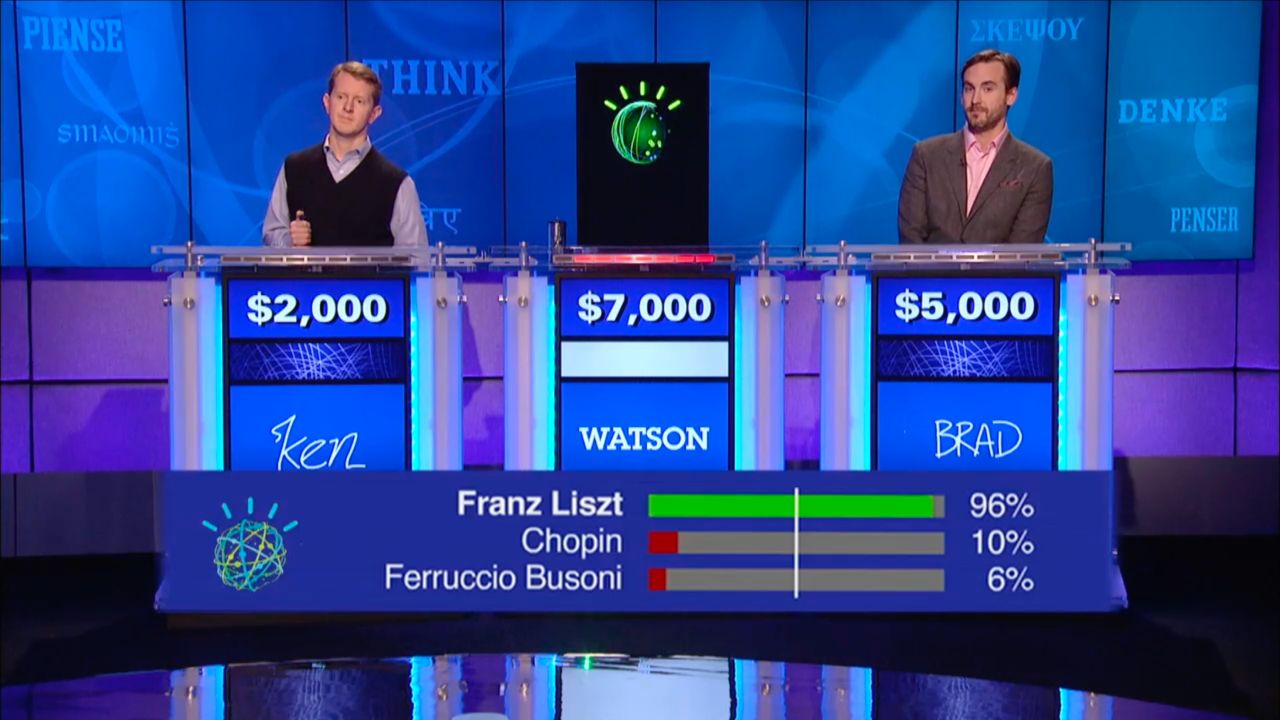
Working with IBM Research and lead scientist David Ferrucci, I designed the on-screen answer panel: Watson's top three candidate answers, each with a confidence percentage and a buzz threshold indicator. If confidence cleared the threshold, Watson rang in.
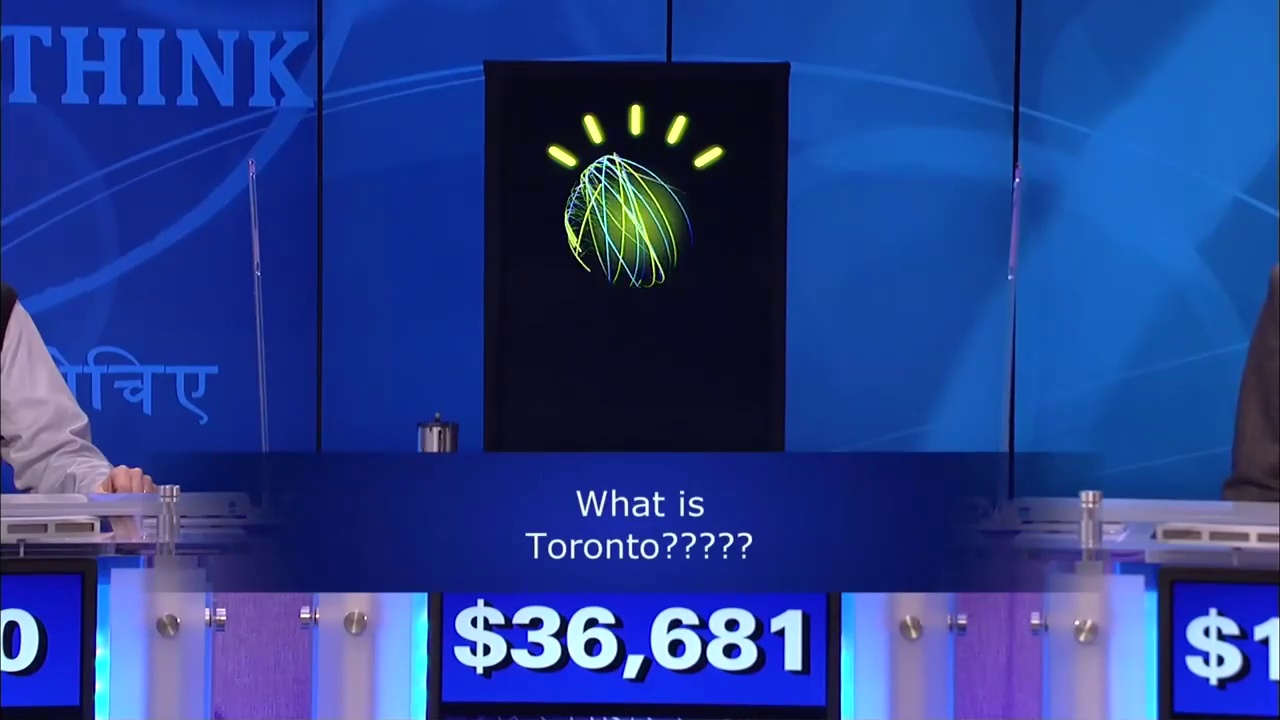
The panel made Watson's reasoning legible and accessible. Viewers could see how the system weighed different answers against its confidence and buzz threshold. That transparency was what turned Watson from a black box into a character.
The Broadcast
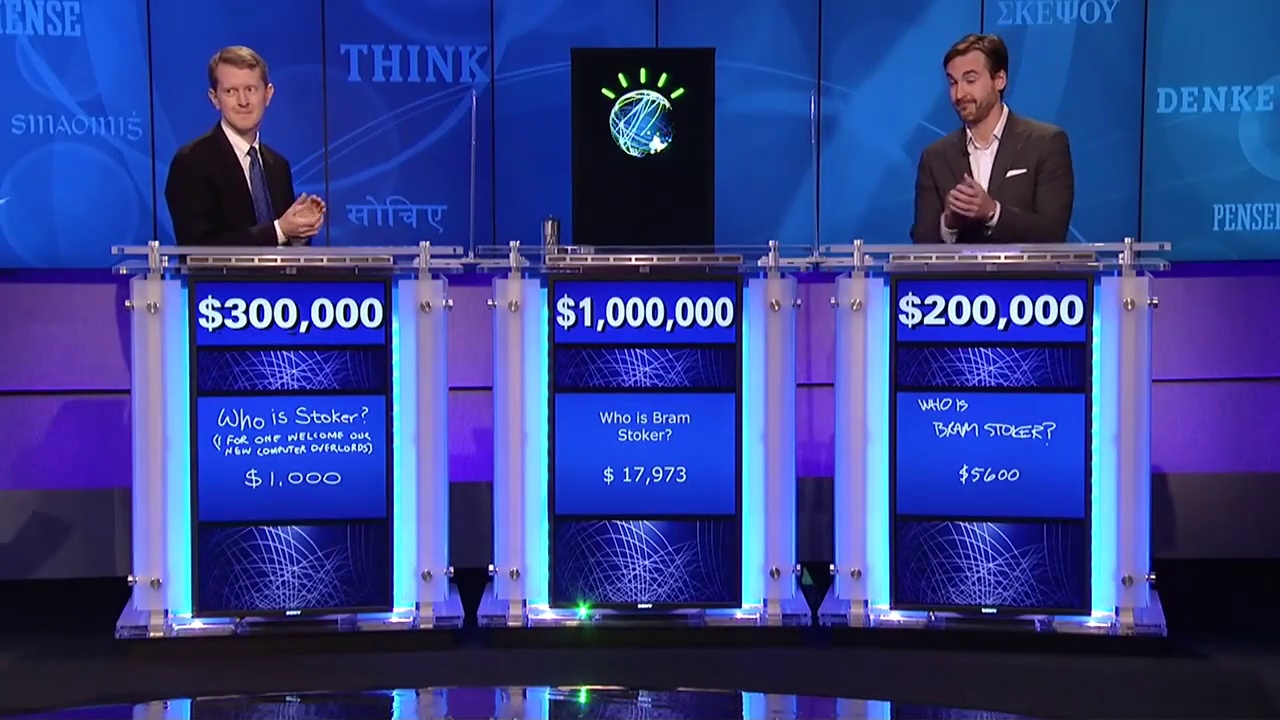
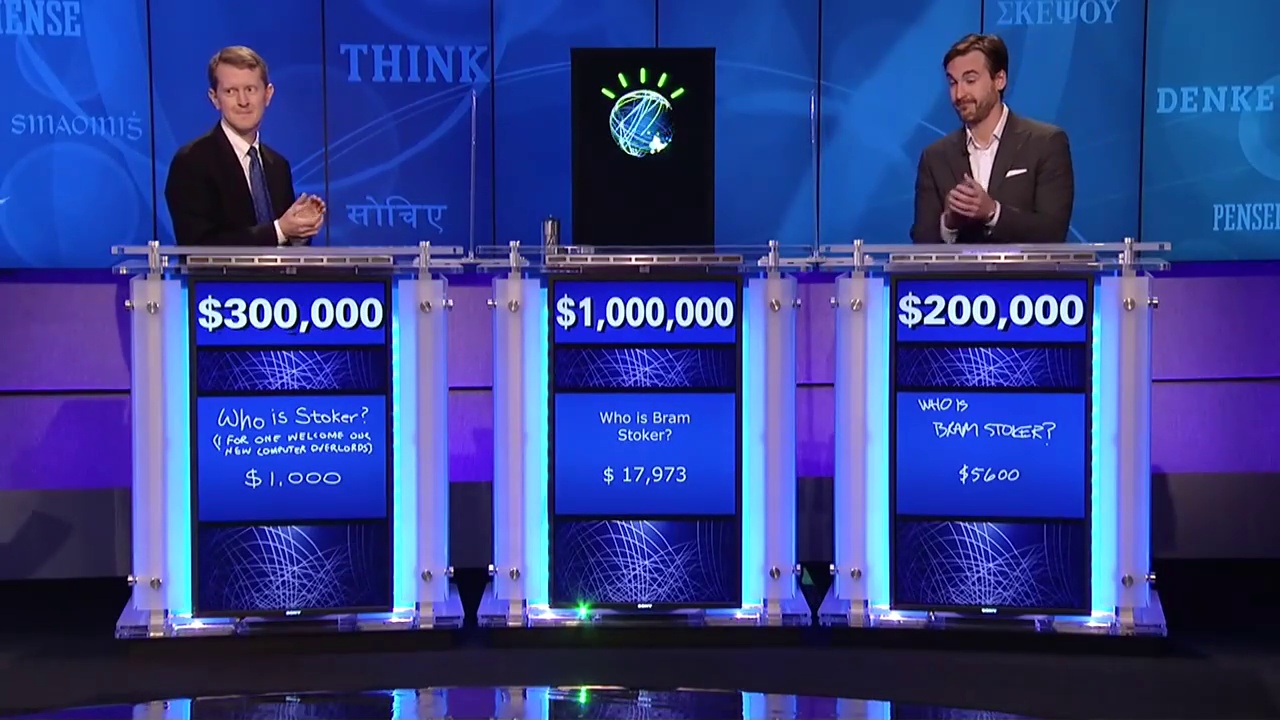
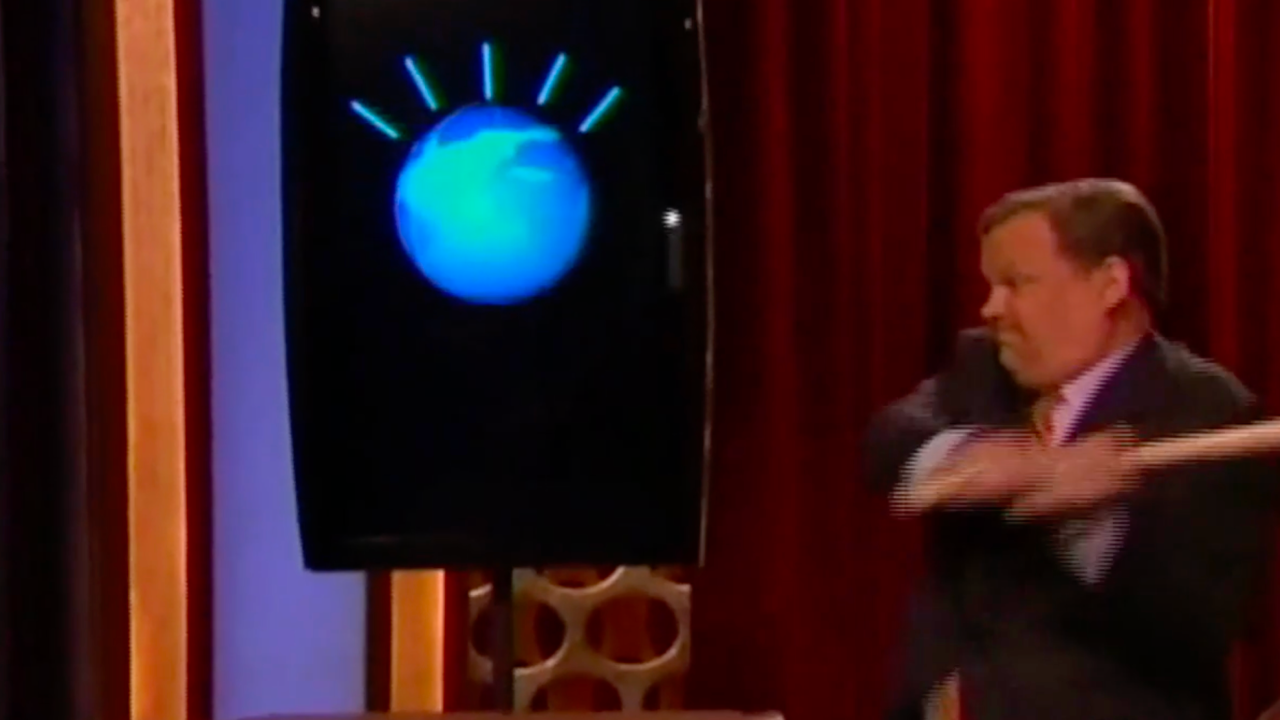
The televised matches aired February 14–16, 2011. Watson defeated champions Ken Jennings and Brad Rutter and won the $1 million first-place prize. It was the most-watched Jeopardy! event in the show's history and Watson became a cultural moment – parodied and mentioned across late night shows like Late Night with Conan O'Brien, The Daily Show, and The Tonight Show with Jimmy Fallon.
Why It Worked
The avatar helped viewers root for Watson; feeling sorry for it when a high-confidence guess whiffed. That was the goal. By making the machine's internal state visible (confidence, hesitation, certainty), we made Watson feel like a participant instead of a calculator.
Legacy
The visual language we developed in 2011 still echoes in how IBM represents Watson today.
Additional images